English
 Русский
 عربي
عربي Español
 Français
 Português


SST Soil Stabilization Technology
SST Technology: Definition and Operating Principles
A soil solidifier is an engineering material formulated from a composite blend of various organic and inorganic substances or biological enzymes. Its core mechanism of action involves a series of complex physicochemical reactions that alter the surface charge properties of soil particles and compress the electrical double layer on their surfaces. This process effectively disrupts the adsorbed water films situated between soil particles, thereby facilitating the rapid formation of a stable skeletal structure by inorganic or organic cementing agents.
01. Ion Exchange
Converts the hydrophilic groups on the surface of soil particles into hydrophobic groups, thereby reducing water content.
02. Structural Formation
Promotes the rapid formation of a cementitious material framework, thereby filling the voids between soil particles.
03. Rapid Solidification
Rapidly and efficiently dewaters and solidifies materials such as soil, sand, and slag, forming a stable soil mass.
Product Introduction
Composition of SST Soil Stabilizer
Composition of Liquid and Powdered Cementitious Materials
Liquid Cementitious Materials: SST Gelling Agents, Polymeric Resins, Biological Enzymes
Powdered Cementitious Materials: Cements, Hydrated Lime, Polymeric Activators
Typical Soil Stabilization Applications: A mixture of SST Stabilizing Agents and Powdered Cementitious Materials.


Key Technical Features of the SST Soil Stabilizer
Exceptional Performance
• High Strength
• Durable & Crack-Resistant
• High Structural Integrity
Eco-friendly
• Use materials available on site
• Low-Carbon and Eco-Friendly
Cost-effective
• Reduce Costs and Increase Efficiency
• Simple Construction

Wide Range of Application Scenarios
SST technology is well-suited for engineering projects with stringent requirements for cost control and rapid construction, and finds widespread application across a diverse range of infrastructure scenarios.
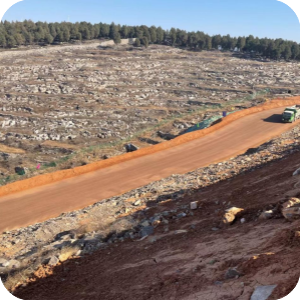
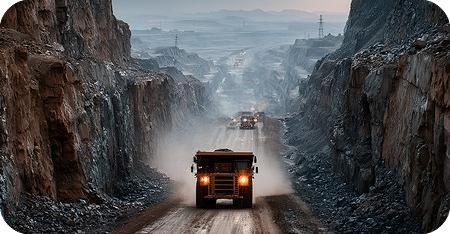
Construction of Lower-Grade Roads Industrial & Mining / Open-Pit Roads Withstands Heavy Loads Wear-Resistant & Durable Rural & Forestry Roads Utilizes Local Materials Adapts to Terrain Lower Cost |
High-Grade Highway Structural Layers Pavement Base / Sub-base Load-bearing foundation for high-grade highways—stable and solid. Roadbed Embankment Soft foundation reinforcement & bridge abutment backfill – effectively controls settlement. |
Site Paving Parking Lots / Freight Yards / Drying Grounds Enables rapid, large-scale surface hardening; features a robust base suitable for heavy vehicle traffic and cargo stacking. |
Wall Construction and Repair Greenhouse wall & historic earthen structure restoration. Local soil rammed earth walls: thermal insulation and air permeability integrated. |
Production of Non-fired Bricks and Imitation Stone Bricks Compress stabilized soil into unfired bricks. Recycle waste into value, save brick-making raw materials and cut energy consumption. |
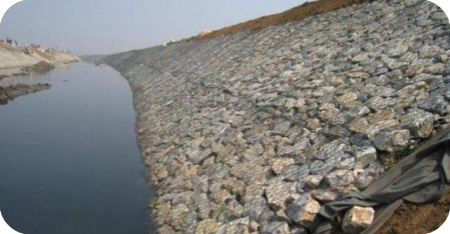
Slope and Seepage Control Engineering Stabilization of slopes and riverbanks; leachate containment for landfills. Enhances soil stability, improves resistance to erosion, and creates an impermeable barrier. |




STANDARD CONSTRUCTION PROCESS FLOW
Construction Process:
Preparation and Mixture Preparation
01Construction Preparation 1. Site Preparation 2. Technical Preparation 3. Material Preparation |
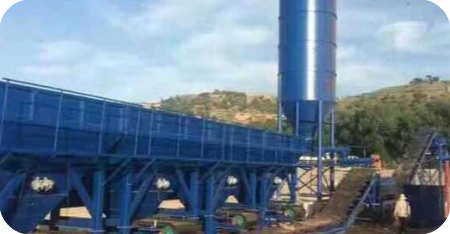
02 Mixture Preparation (Road-Mix Method) 1. Spreading of Plain Soil 4. Initial Mixing 2.Adjust moisture content 5. Spray the SST 3. Spreading Cementitious Materials 6. Secondary Mixing and Curing |

Construction Process: Paving, Compaction, and Curing
01 Precision Leveling |
02 Roll Forming |
03 Initial Moisturizing Care |
04 Key Metric Monitoring |


Significant Advantages of SST Stabilized Soil
Economic Benefits
● Reduction in Material Costs 20%-40%
● Reduction in Construction Costs
Social Benefits
● Shortened Construction Period
● Solid Waste Utilization
Engineering Quality
● Stability Improvements
● Enhanced Durability

Wide Range of Application Scenarios
Application Case Studies
Our technology has been successfully applied in numerous real-world engineering projects, yielding remarkable results
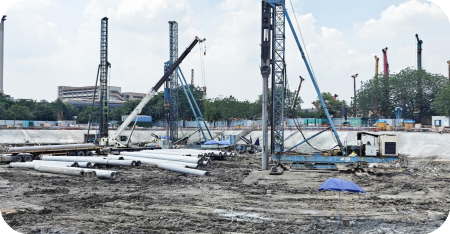
Stabilization of Soft Soil in Guizhou Large piling rigs operate smoothly on stabilized ground, proving its high strength and stability to fully support heavy machinery construction. |
Fluidized Solidified Soil Backfill in Hefei High-fluidity stabilized soil can be precisely pumped into complex underground spaces like karst caverns even at night, enabling fast, dead-zone-free backfilling and reinforcement. |

Rural Roads | Cement-stabilized layer | ||
Shanxi |
Hebei |
Fujian |
Shandong |
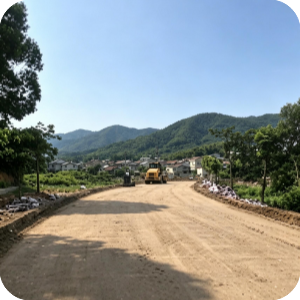


Under Construction |
Under Maintenance |
In Use |
Initial Pressing | Leveling | Compaction |


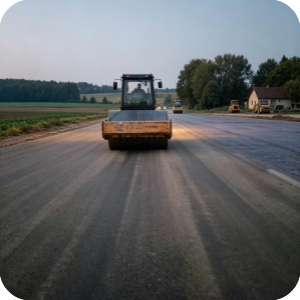
Anhui | Guizhou | Guangxi |